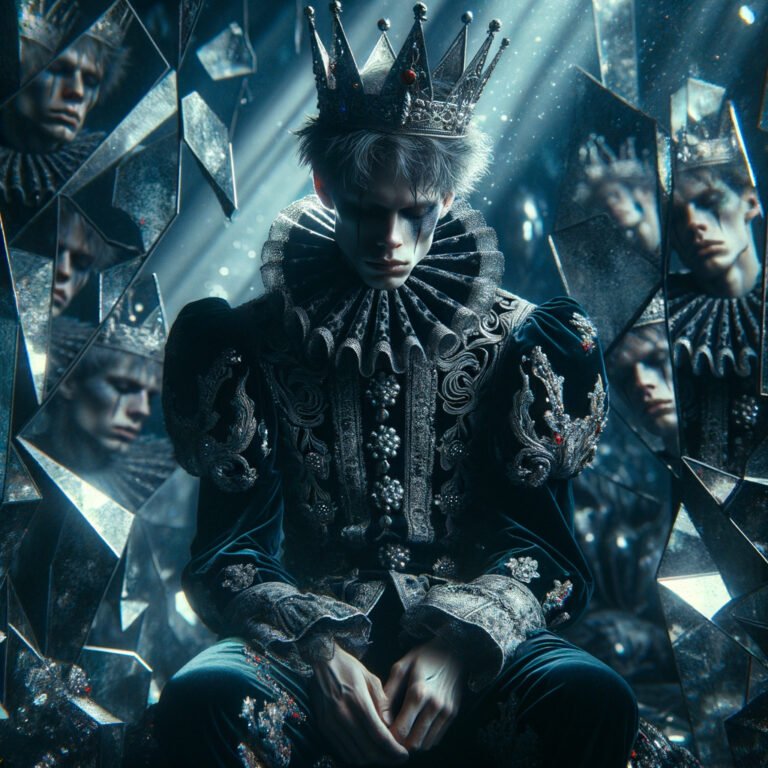
Chrysalis of Tomorrow: Nihilism
Nihilism, in its complete form, is the stretching of the soul so far from equilibrium that it is brought beyond chaos into a frozen state of immobilization.
Thus, I reserve my harshest judgment for the lukewarm man who wills not.
In the lowest abyss of nihilism dwells a foe so terrible that it may yet unite the forces of heaven and hell against it!
Indeed, while the king of hell reigns as the great rebel who forges counter-order, the king of nihilism stands as the great negator, whose sole desire is to drag all existence—including himself—beyond chaos, into a void of absolute nothingness.
In the beginning, a precosmogonic jester—the great negator—granted a king whatever his heart desired.
Desiring to reign all realms absolutely, the king wished to be omniscient, omnipotent, and omnipresent.
The trickster, with cunning and guile, granted the king’s wish—and soon after, the king plunged into a nihilistic madness too great to bear.
To be omnipresent is to dissolve all other presence into oneself—yet when the unstoppable king met the unmovable jester, presence did not vanish, but merged, and they became one.
Knowing all things and possessing all power, the jester-king could will nothing new—and when one cannot will, one inevitably wills nothingness.
And thus the jester-king sat upon a throne of mirrors—each one reflecting the same infinite face, until all reflections shattered, and still he saw himself, not as many, but as none.
In erotic desperation, the jester-king clawed out his eye and birthed being—partly ordered, partly absurd.
In truth, man wrestles not only with divine order, but with the malice breeding absurdism that is part and parcel of being; the moralization of bitter absurdism spontaneously re-orders and re-orients an individual towards the will to redistribute cruelty.
The jester-king gazed regretfully upon the unwashed masses and sent a flood to cleanse the earth.
The jester-king proclaims—no, commands—‘Truly, the heavens and the earth shall one day pass away,’ for no flood, neither of water nor of blood, can cleanse the world of the sin of existence.
Indeed, day by day, the fabric of existence is torn asunder. Who, then, can withstand the absolute will to nothingness?
As man fell by the advent of moral knowledge, so too must he ascend—transcending good, evil, and non-being through the sublimity of a swan song.